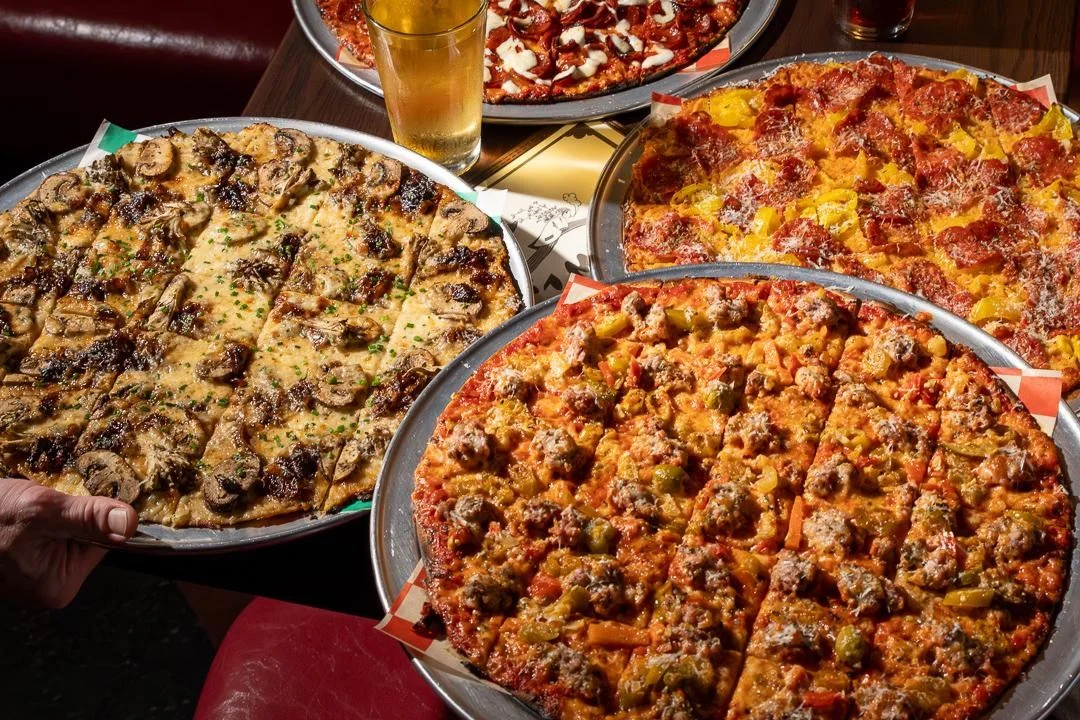
Tavern-style pizza travels well because it offers more than a regional recipe: it brings a particular kind of gathering with it. Its thin, crisp crust and small square portions suit a table where people are sharing drinks, conversation and several different toppings. Restaurants from Portland to Washington, D.C., and New York are drawing on that Midwestern tradition while giving it their own local expression.
A familiar Midwestern staple finds a wider name
For Brittany and Brennan Grosvenor, the owners of Proof in Portland, Oregon, this style was simply the pizza they grew up eating in suburban Chicago. Family pizza nights meant choosing among thin crust, deep dish or double-dough. Their restaurant serves the thin version, though “tavern-style” has become the more widely recognized label beyond the Midwest.
That naming shift also reflects a correction to the familiar picture of Chicago pizza. Deep dish may be the city’s most visible culinary calling card, but it isn’t necessarily what locals eat most often. As Brittany Grosvenor puts it, “The pizza you get every week, or if you go to a kid’s birthday party, it’s always tavern-style.” The everyday pie, in other words, can tell a different story from the one tourists expect.
Across Chicago, Milwaukee, Minnesota and St. Louis, versions of the style share a thin, cracker-like base and a grid cut instead of conventional wedges. Recipes vary: sauce can be sweet or spicy, and regional preferences shape the toppings and cheese. Crispness and lightness remain the common thread. In 2023, Esquire writer Omar Mamoon described tavern-style as “a foil” to Detroit-style pizza, whose national profile had surged in the late 2010s.
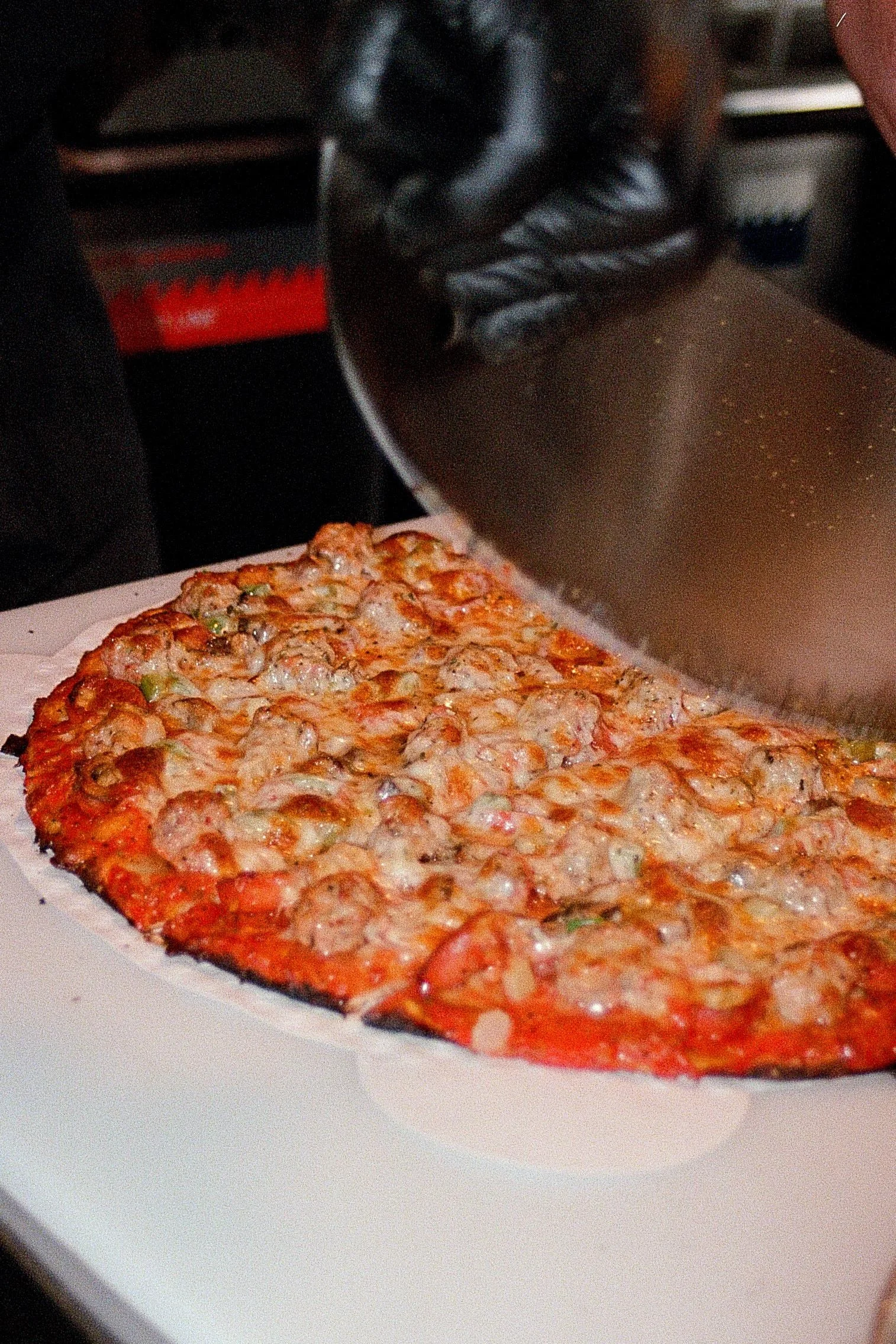
The square cut is built for the table
The party cut changes how a pizza works in a group. A grid produces more small pieces than a pie cut into triangles, and those pieces are easy to pick up and eat alongside a drink. Bradley Shorten, who owns Kim’s Uncle Pizza in Westmont, Illinois, and the recently opened La Merna in Washington, D.C., sees that practicality as central to the format. Square slices fit on cocktail napkins and make natural drinking food.
Shorten also has a specific standard for a well-made pie: each piece should carry some of every ingredient, with toppings reaching the edge. Even the small corner pieces have their own following. They may not be everyone’s pick for the best bite, he says, but “everybody goes for” them—particularly in Chicago.
The format has helped the style find a place in a growing number of restaurants. Recent openings include Keepers in New York City, One Trick Pony in Fort Worth, Texas, Tillie’s Tavern Pizza in Wheat Ridge, Colorado, and Chicago’s Zarella and Dimmi Dimmi Corner Italian. The spread has given Chicagoans a chance to point out how common thin crust is at home, while diners elsewhere in the Midwest can make the case for their own local traditions.
Regional roots, restaurant-specific versions
For Mike Fadem, tavern-style offered a way to broaden the menu at the second New York location of Ops, a pizzeria known for wood-fired, Neapolitan-inspired pies with spotted crusts and supple dough. Fadem grew up in St. Louis, where the city’s signature pizza is especially thin. He likes it, but says it “maybe not the best version of tavern pizza,” pointing to the criticism some diners direct at St. Louis-style, including its use of the gooey processed cheese Provel.
Fadem sees the family of thin-crust pizzas as a chain of adaptations: St. Louis pizza took cues from Chicago, which in turn drew from Neapolitan pizza. Each regional turn changes the result. An Ops employee from New Jersey brought another tradition into the conversation: the state’s own bar-style pie, with Boston-area bar pizza offering yet another variation.
Ops’s answer is called “tavernetta,” a deliberately broad name for a pie shaped by several sources. Fadem wanted it to reflect the restaurant’s sourdough and bring out the flavor of whole grains, while delivering the crisp texture he believes appeals to New Yorkers. St. Louis and New Jersey were early reference points, but his research led him to Milwaukee as the source of the best pizza he tried. The new pie has joined the menu alongside Ops’s established offerings; groups often order one in addition to their other pizzas.
At Los Angeles cocktail bar Bar Next Door, bar pies serve a more direct hospitality purpose. The venue added food in June, ahead of its third anniversary. Previously, customers could bring in pizza from neighboring Prince Street Pizza, whose co-owner Lawrence Longo is a partner in the bar. But owner and bar director Brynn Smith wanted a lighter option that would encourage guests to stay longer. “After having a slice, sometimes you get a little full and you’re like, I want to go to bed,” she says. The bar’s pizzas are made exclusively for it by Prince Street and appear on the menu as “bar pies.”
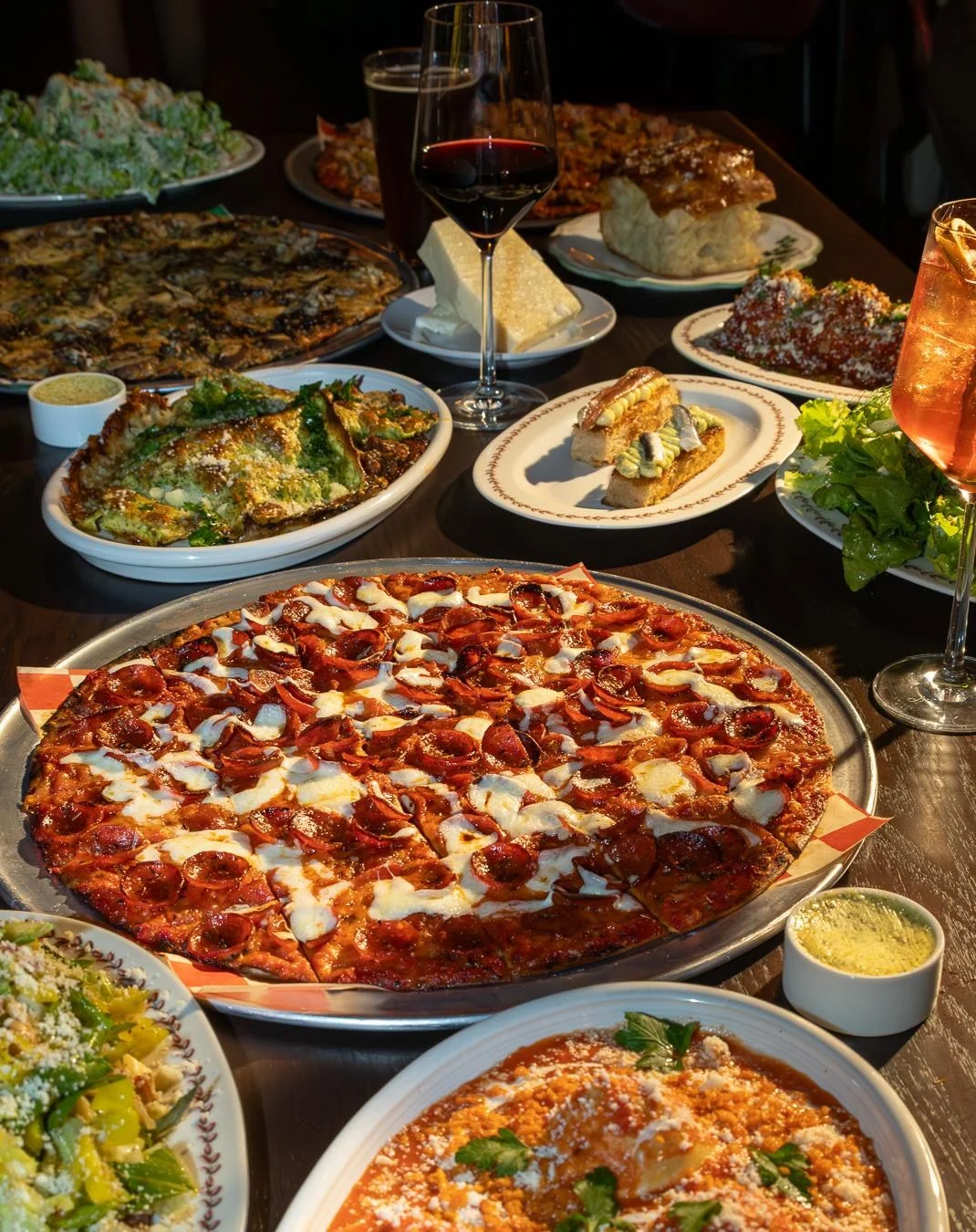
More than a menu trend
The pizza’s rise is tied to the room around it. Shorten and his wife, Meg Schmitt, who grew up in St. Louis, shaped La Merna around the atmosphere of a Chicago dive bar or Wisconsin supper club: wood paneling, checkered floors, red leather booths, pitchers of beer and food meant to be shared without ceremony. The appeal of the tavern setting is its lived-in familiarity. It gives diners a reason to settle in rather than treat the meal as a quick stop.
That feeling helps explain why tavern-style travels alongside a broader interest in tavern-inspired restaurants. A hometown pizza shop carries cultural associations with easy, familiar meals and long-standing neighborhood rituals. The small squares fit that mood: they’re informal, easy to pass around and compatible with an evening that stretches past the last bite.
The Grosvenors are extending the same logic at Proof. Alongside thin-crust pizza, they’ve added Midwestern cafeteria-style Bosco sticks—stuffed breadsticks—and Italian beef with giardiniera. Portland had some Midwestern favorites, Brennan Grosvenor says, but not always in one place. Their aim is to recreate the range of a Chicago tavern menu and the feeling that comes with it.
That may be the style’s strongest export: not a single fixed recipe, but an adaptable combination of crisp pizza, shareable portions and a welcoming place to linger. As more restaurants put their own regional stamp on the format, the square-cut pie looks set to keep introducing diners to the Midwestern traditions behind it.