Platforms: PlayStation 5, Xbox Series X/S, PC
Publisher: Sega
Developer: Ryu Ga Gotoku Studios
Release date:
Stranger Than Heaven is asking a bigger question than how the Yakuza began: what would it take for a man to build a place where he could belong? That ambition makes it one of my most anticipated early 2027 releases. The story follows Makoto Daito across 50 years, starting in 1915, when he stows away on a ship from San Francisco to Japan to escape anti-Asian prejudice in the United States. He arrives in Kokura expecting a fresh start. Instead, he finds another kind of exclusion.
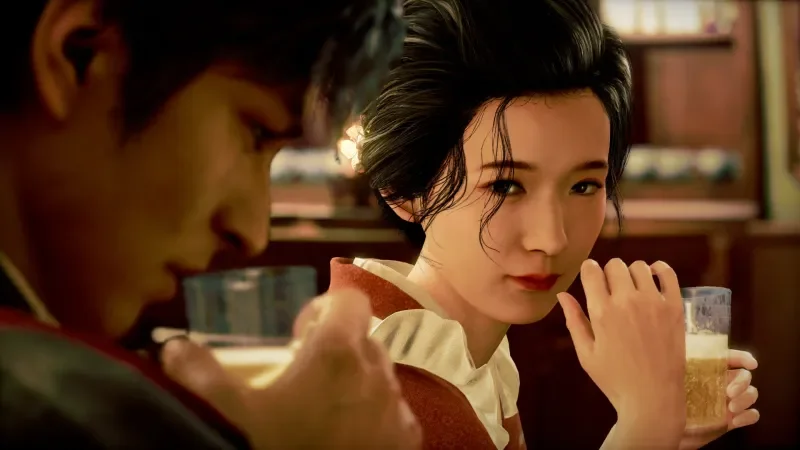
Daito is half American and half Japanese, and he doesn’t feel at home in either culture. In Kokura, he takes jobs for Orpheus, played by rapper Snoop Dogg, while locals jeer at him. Tae Matsumoto, a bartender, is the first person who seems to look past his outsider status. Daito initially approaches her bar to weaken a rival gang, but after an evening together he admits what he was doing and asks her on a proper date. The relationship puts him in danger: Tae is the mistress of Oki Clan boss Oki, who orders a hit on Daito and takes her away.
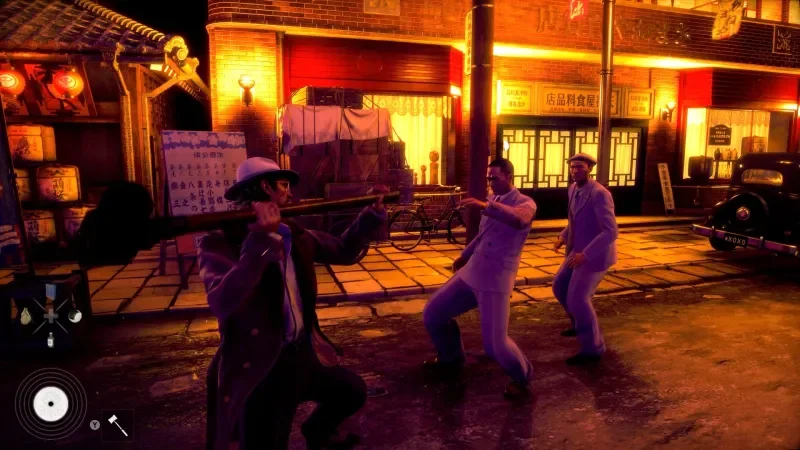
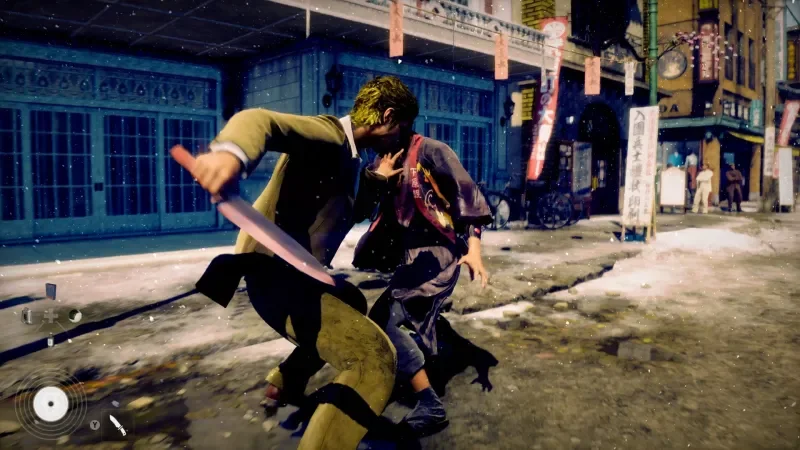
Daito’s attempt to rescue Tae drives the most dramatic stretch of the three hours I spent with the game: an assault on the ironworks mill, ending in a fight with the imposing Shimura. The combat system maps the shoulder buttons to Daito’s arms and the triggers to his legs, making each attack feel tied to a specific limb. Shimura brings out a massive melee weapon in his second phase, so I switched to a knife and relied on its speed to dodge his swings and take him down.
Kokura is only the beginning. Daito’s story moves through Kure in 1919, Osaka in 1943, Atami in 1951 and Shinjuku in 1965. I explored Kure and Osaka during my hands-on time. Kure has a fighting arena where opponents grow tougher as you advance, with the option to revisit earlier fights under special conditions. I also ran into a masked serial killer who gave me the hardest fight of the session.
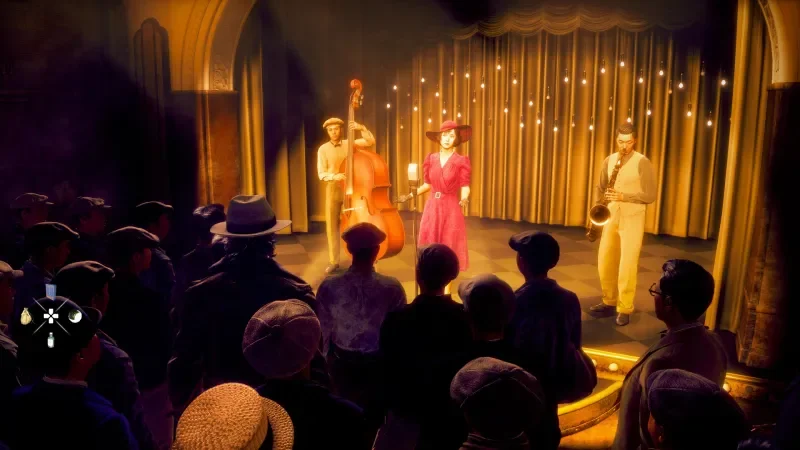
There’s a quieter creative thread, too. A composer can turn sounds Daito notices into songs: during my playthrough, those included a baby crying in a nearby house and the metallic crack of his weapon hitting a thug. Osaka offers a sharp change in how people treat him. By then, Daito’s work in organized crime and music show business has made him a public figure, and people greet him with smiles. I spent that section arranging billboard ads with local business owners, then putting on a theater show by choosing its program and performers before joining the performance myself.
Those systems give the game a wider range than a crime story alone would suggest. After the demo, I spoke with director Mikinobu Abe and actor Yu Shirota, who plays Daito, about the game’s themes and the choices behind Ryu Ga Gotoku Studio’s newest entry in the Yakuza/Like a Dragon universe.
A new story about how an organization begins
When you began planning the next game, what led you to make a prequel with a premise so different from the Yakuza/Like a Dragon series?
Mikinobu Abe, Director: We didn’t start by deciding to make something connected to Yakuza or Like a Dragon. While making those games, we kept wondering how someone might create an organization like the yakuza. We have the Tojo Clan and the Omi Alliance in the series, but we hadn’t told the story of who founded something like that, or why. That question became our starting point, and we added other ideas as the narrative developed.
Making the central character Japanese and American gave us a new way into the story. It opened up possibilities for the studio. We wanted to tell how an organization could begin, but we weren’t setting out to make a prologue to Yakuza or Like a Dragon. We wanted a new work that felt unlike what we’d made before.
Why did Makoto’s experience between two cultures become such a central part of the story?
Abe: At first, we had a Japanese man trying to build an organization. We needed a strong reason for him to do that, and we felt his mixed Japanese and American heritage could give us one. It also let us bring American characters into the story and have them speak English while Japanese characters speak Japanese. That kind of multilingual setting felt unusual for a game, and it sparked more ideas. We thought the theme would strengthen both the narrative and the gameplay experience.
Yu Shirota, Actor portraying Makoto Daito: Makoto and I both know what it can feel like to stand between two cultures or countries. The story follows how he grows through that struggle. These are my own thoughts, not necessarily Sega’s or Abe’s: people can struggle to understand their identity for many reasons, not just race. Makoto’s story is about finding himself between two countries. I hope players who have been labeled or told they don’t belong can find some courage in his effort to understand who he is.
Makoto leaves the United States hoping Japan will accept him, then faces prejudice there too. How does he respond to that experience?
Shirota: I experienced something similar when I was younger. I felt like an outsider in Spain, then came to Japan thinking I was returning home, only to face some of the same feelings. That made it easy to imagine what Daito was going through. I think people who have lived between cultures can understand that particular struggle in a way others may not.
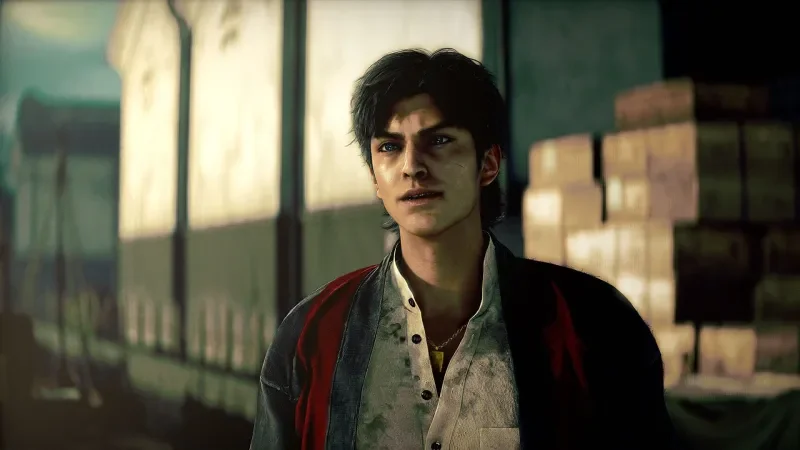
When Daito first reaches Japan, people call him “ketō,” a slur used for Westerners at the time. He doesn’t know what it means. He tries speaking with people around town, but his Japanese isn’t strong yet, and they dismiss him as a foreigner. It’s painful to see, Shirota said, but it also feels familiar to him.
Abe: In motion capture and voice work, we paid attention to how Japanese Daito is at each point in his life, as well as to the other characters who join him across the eras. At the beginning, his body language and first language are more English; he keeps more personal space and moves in a more Western way. As he spends time in Japan, he learns how to communicate in ways that feel more Japanese, including with people in positions of authority.
We carried that change into facial animation and lip movement. His fluency affects how he speaks. The story may seem specific to Daito, but I think most people have experienced being the stranger at a new school or workplace. They may not face what he does, but those details can still resonate with players around the world.
Will players hear Daito’s Japanese improve as the story progresses?
Abe: Shirota deserves a lot of credit for the small details. You can hear the change in his battle lines. Early on, he might shout “Take this!” or “You bastard!” in English; as time passes, those lines gradually become Japanese.
Shirota: It was challenging to track his age and the way he thinks. When Daito arrives, his thoughts and the things he says to himself are in English. Five or ten years later, they’ve shifted to Japanese. That was an interesting balance for me, since English is my third language and I had my own experience moving from Spanish to Japanese. His age mattered, too: the teenage Daito and the man we see in the 1960s are completely different, and you can hear it in the voice.
Abe: Japan also has many regional accents. Hiroshima and Osaka sound quite different, and Shirota handled those accents well.
Shirota: It was hard work.
You seem particularly suited to the role, given those experiences.
Shirota: I could put every experience from my life into Daito, which helped me build the character. I’m very happy to play him.
When Daito first arrives in Kokura, he seems determined not to stand out. Later, he has bleached hair and seems more willing to show that he’s different. Is that a fair reading?
Abe: That’s a good interpretation, though I don’t want to spoil anything. We showed a cutscene at Tokyo Game Show where Daito speaks with a character named Hama, and there may be a few clues there. I can’t say more. Daito will search for his identity throughout his life, and his appearance reflects what he’s experiencing in each city and era. We planted small hints throughout the game; some might be so subtle that players miss them even after release. We hope people notice how he fits into Japan, and the moments when he chooses not to fit in.
Building a life across five decades
What was difficult about making players feel they know Daito across 50 years?
Abe: Players will see his whole life. Showing one man’s life over that span was difficult, and Daito isn’t the only character who ages. His friend Yu Shinjo, played by Dean Fujioka, was another challenge. Fujioka is in his 40s, so when we modeled an older version of him, we had to imagine how he might look later in life.
We had reference photos across different ages for Bunta Sugawara’s character Iwaki, which helped, though I wouldn’t call that easy—the character team would be angry with me if I did. Aging the cast was a major challenge. I’m 29, and there are points in Daito’s life where I don’t know from experience how someone would feel at that age.
Shirota: I’ve lived 40 years so far, so I can imagine many of the experiences and challenges that come with those years. Daito’s final period in Shinjuku takes him beyond my own age, so I had to imagine what that might be like. Thinking about the events that shape him into the man he becomes was a fascinating part of the work, though I can’t discuss the details because of spoilers.
People treat Daito very differently across the eras. In Kokura they insult him; in Osaka they greet him warmly. How does that shift affect him?
Abe: Daito takes on different identities throughout his life. He arrives in Japan as nobody, then joins the Yashima Trading Company, led by Yashima. Later, in Kure, he joins the Iwaki Clan, which is a major part of the story. In Osaka, he starts a promotion company with Yu Shinjo. Those roles shape how people respond to his title, and we built that change into the gameplay.
We also used cutscenes and background performances to show how people see him. In one scene, passersby treat him as someone unwanted; in another, they barely notice him. We shaped those reactions around the identity Daito holds at that point, so players can read his place in the world through both the story and the way it plays.
Shirota: Daito begins young and frightened, unsure what to do and pushed toward assimilation. Over time, he finds his worth and grows harder. He enters the yakuza world and becomes part of a clan; the story shows how that process changes him. By the end, people call him “Boss.” I could draw on my own experience as an actor and public figure, where people approach me with praise, to imagine what that change might feel like for Daito.
Why did you choose these particular cities for the different eras?
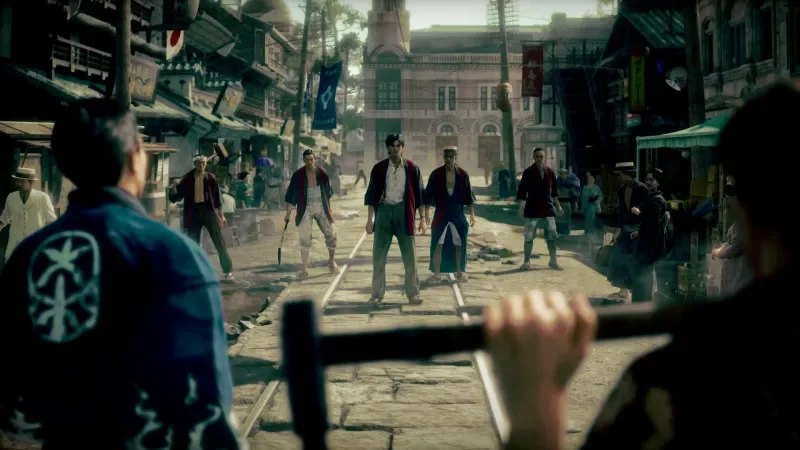
Abe: The cities followed the story we wanted to tell. We needed more time than our earlier Yakuza and Like a Dragon stories, which often cover about a week, to show how someone could build an organization of this scale. We settled on following a man’s life as he tries to create a place he can call home. Kokura in 1915 was a natural starting point: it was a major industrial city, and it made sense for someone who had stowed away on a ship to end up there.
History as a backdrop, not a reenactment
For Stranger Than Heaven, the past gives Makoto Daito pressure to push against. It isn’t the point of the story. The team began with two fixed locations: 1965 Shinjuku as the destination, and an earlier point that would help define the journey. They chose other cities and eras for the situations they could put Makoto in. Take 1929 Kure. The Japanese city is associated with the yakuza film Battle Without Honor and Humanity, making it a natural setting for a story about the underworld. It also sharpens Makoto’s identity struggle: he’s torn between being Japanese and American, drawn into a distinctly Japanese organization, and surrounded in Kure by people from abroad. The city’s role as a major military port gives that tension room to play out. Building those settings took substantial research. Mikinobu Abe said the team couldn’t reuse assets between cities, and that recreating places from 1915 onward meant searching old photographs, books, and even period magazines in secondhand bookstores. But the goal wasn’t strict historical reconstruction. The developers used what they found as material for a fictional game world, with room to reshape details for play.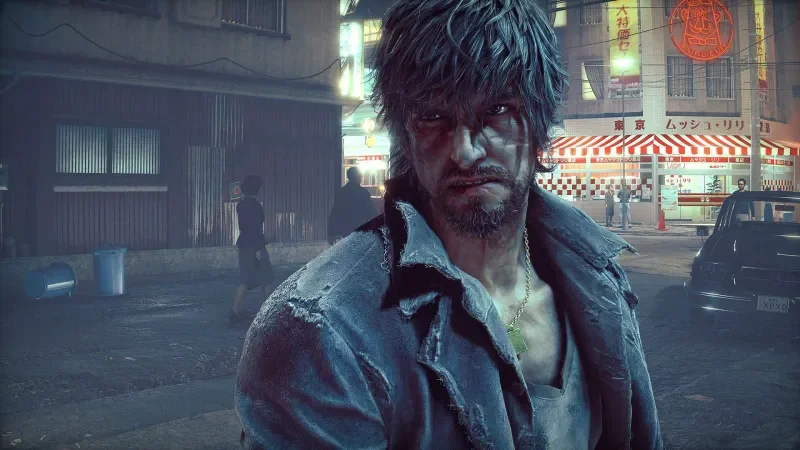 That approach also shaped how the game handles national events. In 1943 Osaka, the story takes place during wartime, and the conflict affects the people who live there. Abe said the narrative stays close to Makoto’s personal life rather than making major historical events its subject. That’s a deliberate trade: the period supplies the conditions, while the game focuses on how one person navigates them.
A vintage look built from analog techniques
Abe’s film-school background helped guide the visual style. He studied classic movies, camera lenses, and the film techniques of earlier eras. The team researched vintage lenses and analog production methods, including ways of adding text to film by writing on glass and printing the result. Those constraints offered a visual texture that computer graphics can’t automatically reproduce. Art director Daishi Kanaya brought a different reference point: his background in oil painting led him to study Japanese painting from the periods in the game. Abe and Kanaya found that older paintings handled light differently from contemporary work, and combined that with the film research to develop a look neither had seen before. Abe also cited classic Hollywood and gangster movies, Japanese ninkyo films about the yakuza, and the work of Bunta Sugawara, the legendary actor who appears in the game. The same thinking reaches beyond the image. Makoto uses a wind-up camera, then takes the film to a pawn shop to be developed. Abe wanted that kind of analog gadget in the game partly because he grew up with a smartphone and never used cameras like these himself. For the cutscenes, which he directed in large part, the team also aimed for a vintage feel: restrained camera movement, with lighting that still feels modern. It’s a fine line, and the developers experimented to find it.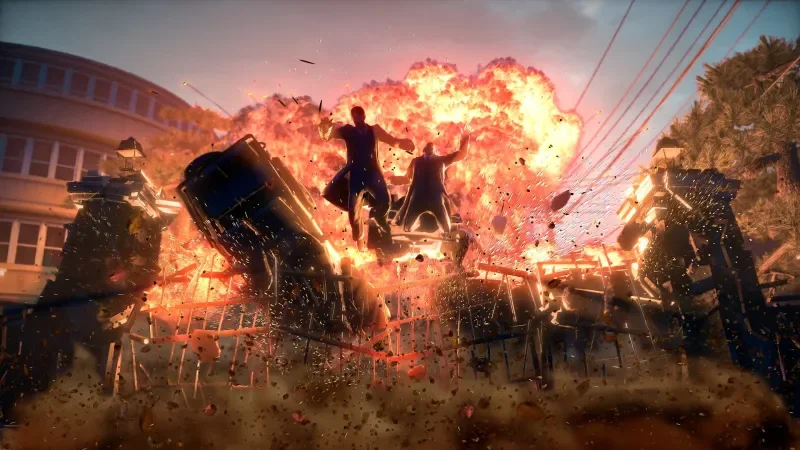
Combat that changes with Makoto
Abe said the younger team didn’t set out to imitate the Yakuza series. They focused on making Stranger Than Heaven its own game, with mechanics tied to the character at its center. Kazuma Kiryu’s strength suits a brawling style; Ichiban’s story about friendship fits turn-based combat. Makoto begins without knowing how to fight, so his combat had to make that inexperience felt. The team looked to ninkyo films for the rawness of their fights: characters grabbing clothes and scrambling through confrontations rather than moving like trained martial artists. Abe described the intended feeling as a matter of survival, with the player meant to share Makoto’s tension and gradually grow more capable alongside him. The combat may take a moment to click, but its purpose is clear: the controls should help the player inhabit Makoto’s changing life. The minigames follow the same principle. They’re chosen to express the atmosphere of each city and era, drawing on what people played at the time. Some will recur throughout the game; others belong to just one place and period. As technology changes across the story, so will the available games. Abe said more minigames are still unannounced.