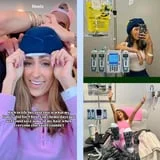
Leila Esmaeili began posting about breast cancer because she wanted to make an unexpected diagnosis less frightening for someone else. Sharing the experience brought her support and a far wider audience than she expected, along with the occasional unwanted opinion. Her story shows how a personal health update can turn into a public resource, even when the person posting didn’t set out to become a source of guidance.
A diagnosis that came as a shock
At 30, Esmaeili felt a quarter-size mass near her right breast. A dermatology physician assistant, she suspected it wasn’t a cyst or a benign fatty tumor and sought an ultrasound. The initial scan looked fine. After the mass was removed and biopsied, however, she learned on Jan. 23, 2024, that she had triple-negative breast cancer (TNBC). The gap between a reassuring scan and a cancer diagnosis made the news especially difficult to absorb.
“When I got diagnosed, I was like, ‘Oh my gosh, I have to share this with the world,’” she told PS. The shock pushed her to speak publicly. Her medical background also made her comfortable describing the details of diagnosis and treatment. That familiarity could help her explain what she was experiencing, but it didn’t make her own diagnosis any less personal or unsettling.
From a few posts to a large audience
Before her diagnosis, Esmaeili rarely posted on Instagram and had only three posts. She began there, telling friends and family what had happened, then shared her diagnosis story on TikTok. That video reached 1.5 million people she didn’t know. The scale of that response illustrates how quickly a personal post can travel beyond its original audience, with little warning about who will see it or what they’ll take from it.
She followed with videos about cold capping, chemotherapy, surgery updates and personal check-ins. As the audience grew, she saw that strangers were following along to support her, too. The posts gave her a way to share the process as it unfolded, rather than presenting a polished account only after the hardest moments had passed.
“This isn't just people that know me that want to support me.”
Social media also connected Esmaeili with other women in the breast cancer community. She initially avoided following many #CancerTok accounts because she found the content frightening. Still, she says that when she posted a question, answers often arrived within seconds. For someone navigating an aggressive cancer, that quick exchange offered practical connection alongside emotional support. And this is the part most people overlook: the same stream of posts that can feel overwhelming may also make it easier to find people who understand a specific worry.
Support comes with a comment section
Esmaeili describes sharing her story as overwhelmingly positive, but the public nature of social media brings a cost. “When you share something like that with the world, you open up the door for opinions,” she said. Unsolicited advice can unsettle someone already making difficult treatment decisions. The comments may come from strangers who don’t know the person’s diagnosis, care team, or circumstances, yet can still arrive with confidence.
Her response to rare hostile comments is simple: block the account and move on. “Every so often I'll have someone say something stupid like, ‘Chemo will kill you. Just eat kale,’ and I just block them,” she said. That boundary matters. A public platform can invite conversation, but it doesn’t require someone sharing a vulnerable experience to entertain every response or defend her choices.
She accepts that occasional negativity as part of raising awareness about TNBC. Esmaeili was 31 and had no family history. She says she had been meal prepping and exercising, too—details that underscore her point: breast cancer can affect people who don’t fit others’ assumptions about who gets the disease. Her account doesn’t offer a formula for assessing anyone else’s risk; it shows why assumptions based on age, family history, or lifestyle can be misleading when people decide whether a symptom deserves attention.
Making the experience easier to face
For Esmaeili, the reason to keep sharing is what her posts might mean to people who receive a diagnosis later. “Something horrible happened to me and I wanted to make something good come out of it,” she said. Her goal is to help make the experience less frightening and easier to navigate for those who follow. That aim gives the posts a purpose beyond documenting treatment: they can make an unfamiliar process feel a little less solitary.
What a personal account can—and can’t—offer
Esmaeili’s experience points to a useful role for patient stories online: they can offer companionship and firsthand detail at moments when a diagnosis makes ordinary routines feel unfamiliar. They can also expose readers to information and emotions they may not be ready for, as her initial hesitation about #CancerTok suggests. The value depends partly on what a reader needs in that moment.
If you’re working in this space, the distinction matters: a personal account can help someone feel seen, but it isn’t a substitute for care from medical professionals. Esmaeili’s posts are grounded in her own experience, and that’s precisely what makes them relatable—and limited. Here’s the thing: their significance isn’t that one creator can answer every question. It’s that candid accounts can make it easier to ask those questions and find support while facing uncertainty. A small but meaningful shift.
Chandler Plante (she/her) is an assistant health and fitness editor for PS. She has over four years of professional journalism experience, previously working as an editorial assistant for People magazine and contributing to Ladygunn, Millie, and Bustle Digital Group.