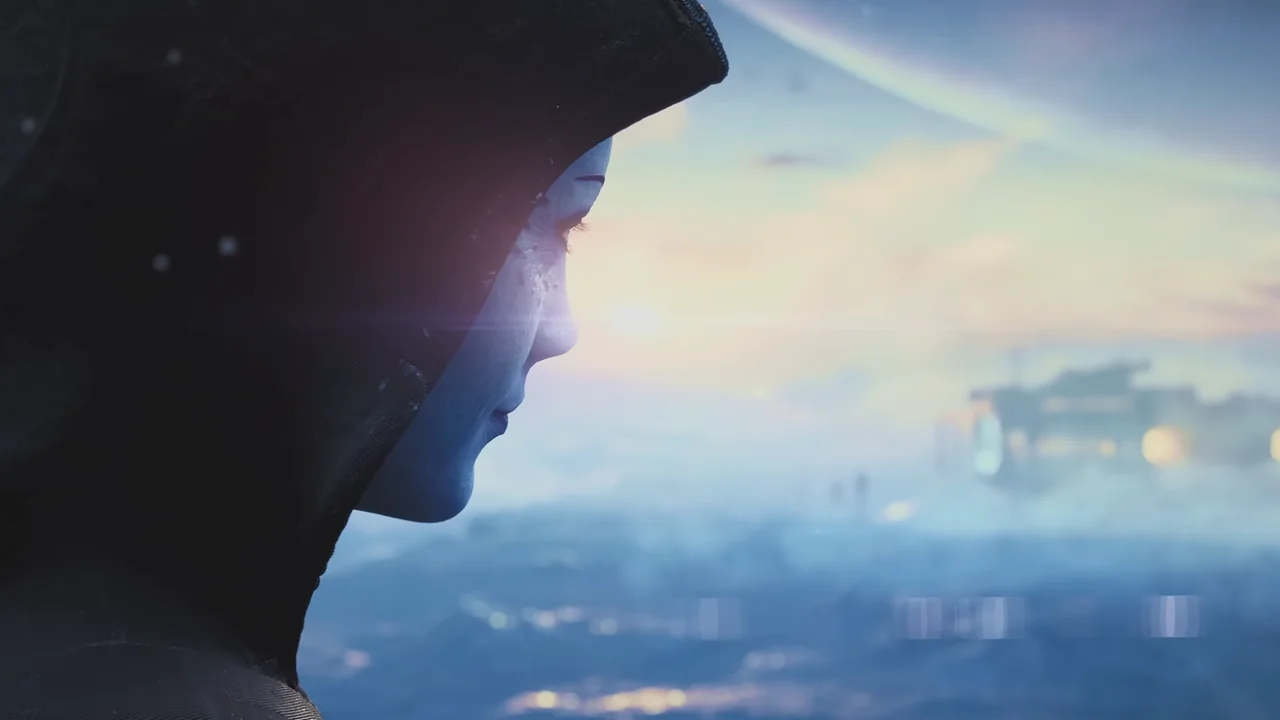
A score for a game that won't arrive
Austin Wintory’s imagined sound for the next Mass Effect is now available to hear: the composer has posted 22 minutes of music he created while speaking with BioWare and EA about the canceled project. The release offers a rare glimpse of his creative direction for a game that, following EA’s decision to close BioWare and cancel the game, won't reach players. There’s no finished game here to provide context for the cues, just a composer’s ideas preserved after the work they were meant to serve stopped.
Wintory, whose credits include Journey and Sword of the Sea, said he’d spent the past couple of years in serious discussions with the companies about composing for the project, then known in development as Mass Effect: Universe. The talks never confirmed that he’d score the finished game. His published music is an exploration of what it might have sounded like, rather than a final soundtrack tied to a known story. That distinction matters: a score is usually shaped in conversation with characters, scenes and pacing, and Wintory didn’t have the plot to guide those choices.
A love letter to the original score
Wintory described the assignment as his “career’s biggest dream project” and “white whale.” A fan of the series since the first game arrived in 2007, he proposed using the score by Jack Wall and Sam Hulick as a foundation, then expanding its sound with more physical, analog synthesizers and closer interplay with the orchestra. He framed the approach as a tribute to the franchise, much like his work on Aliens: Fireteam Elite. The idea suggests continuity with the series’ musical identity, while giving him room to test how electronic textures and orchestral writing could work together.
His enthusiasm prompted him to surprise BioWare and EA with an elaborate musical production: around 20 minutes of material, recorded and produced in Los Angeles with synthesizers, vocals and a large orchestra. The published set runs 22 minutes. Wintory said the project’s plot was still unknown to him, so the music was “just pure musical exploration.” That’s an unusually open starting point for a prospective game score, and it leaves listeners to imagine what the music might have become once it was attached to specific story beats. It might have been revised, rearranged or replaced during development, had the game continued.
The result gives listeners a sense of Wintory’s instincts for the series, while leaving open how those ideas would have changed in response to the game itself. He posted the music on YouTube and said he hoped the drafts would do justice to Wall and Hulick’s work. That humility is telling: he’s entering a musical world with a strong identity, not claiming to define it anew.
So here you go ... Thank you again to my friends at both BioWare and EA. To even dream in your sandbox was a privilege
— Austin Wintory (@awintory) October 26, 2026
https://t.co/wmq2N7s6Kp
A project lost with BioWare
Wintory said learning alongside the public that EA had canceled the game and would close BioWare was a “deeply felt loss.” He also expressed concern for colleagues who’d lost their jobs, as well as for a franchise he fears may have vanished with the studio. His comments connect the cancellation to two losses: the immediate livelihoods and work of the people involved, and the uncertain future of a series whose next chapter was never completed.
The cancellation has prompted a wave of fan activity and renewed attention to what the game might have become. After trailer material surfaced, fans circulated details about the project, including how its story could have accounted for choices across earlier games and the freedom planned for its missions. Those reports offer fragments of a design that might have addressed a longstanding challenge for sequels: carrying player decisions forward while still giving a new story room to move.
Community efforts have included a petition that passed 230,000 signatures and a Times Square billboard. Some fans have also called for a boycott of EA, with that campaign drawing attention alongside the petition. A petition or billboard can show how strongly people feel; it can’t establish whether a publisher will restart a project. And yet, the scale of the response shows that the series still commands attention. Whether these efforts lead to a revival remains uncertain; Wintory’s music, at least, preserves one creator’s response to the world BioWare built.
What the music preserves
BioWare’s influence continues to show up in the work of developers shaped by its games. The studio’s closure also raises questions about how EA handled one of its best-known creative teams, explored in IGN’s opinion piece on BioWare’s legacy.
This is more significant than it looks: Wintory’s release gives fans something tangible to hear, but it also makes the gap between a promising creative process and a finished game unusually clear. The music can’t answer what the canceled Mass Effect would have been, because it was made before the story and score could develop together. If you’re working in this space, that’s the reminder: early creative work can point toward a direction, but it can’t stand in for the collaboration and decisions that turn a direction into a shipped game.
What remains, then, is a sketch with real craft behind it and no final destination. A glimpse, not a finished score.