
Paul’s victory is where the story turns
The real gamble in Dune was never just making its vast world legible on screen. It was making audiences care about a story that questions the very heroes they’re asked to follow. The novel resisted filmmakers including Alejandro Jodorowsky, Ridley Scott and Peter Berg. David Lynch got his 1984 film made, but his adaptation remains divisive, even with its director’s own disappointment. Denis Villeneuve’s two films, by contrast, turned Frank Herbert’s saga of rebellion and dangerous leadership into a mainstream hit.
There’s plenty more source material: Herbert wrote five further books in the original series, and his son Brian later expanded it. Villeneuve is returning for one more film, Dune: Part Three. That decision matters because the next chapter doesn’t reward the familiar heroic arc. Paul Atreides (Timothée Chalamet) has avenged his father, led the Fremen into a galactic holy war and claimed the title of Emperor of the Known Universe. The question now is what that victory has cost.
The answer, drawn from Herbert’s second novel, may unsettle viewers who left Dune: Part Two hoping to see Paul’s triumph confirmed. The story moves onto the Golden Path, through visions and the Water of Life, and into the consequences of power. Here’s the thing: the sequel’s most interesting promise is that it may ask audiences to rethink the person they’ve been following.
The sleeper’s visions
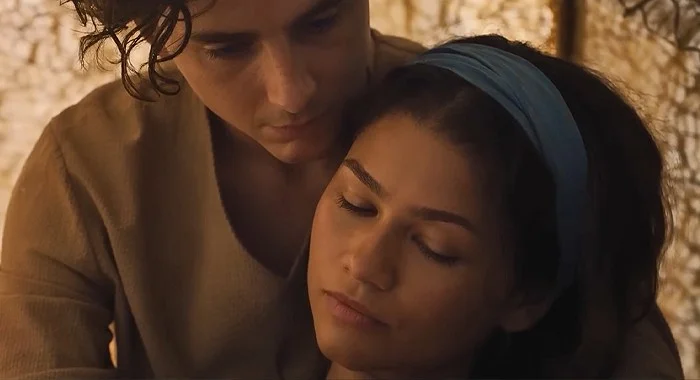
Dune Messiah begins years into Paul’s emperorship; the film is set 12 years after Part Two. A conspiracy is forming around him, while Paul wrestles with the state of the empire he helped create. His prescience offers some warning, but his visions are obscured for a particular reason. More unsettling still, he may let an assassination attempt proceed rather than choose a future that could shape humanity’s fate.
That’s a sharp reversal of the first novel. Herbert uses Messiah to challenge leader worship and the idea that a charismatic liberator can deliver people from history’s mess. The material is harder to adapt than a conventional sequel, and the series has already shown it can get strange: one later book features a human-worm hybrid.
Villeneuve has been laying groundwork for this turn. His Paul has less of the unambiguous heroism associated with David Lynch’s version, played by Kyle MacLachlan, and seems less certain of his future than Herbert’s Paul in the first book. His bond with Chani (Zendaya) is also more fragile than on the page. At the end of Part Two, she walks away instead of accepting the position of royal consort. That change could reshape their relationship in the new film—or Villeneuve may set it aside to focus elsewhere.
The teaser released March 17 hints that he has other priorities. Messiah also brings in the Bene Tleilaxu, genetic engineers whose Face Dancers can alter their appearance, and gives more room to the Spacing Guild and Bene Gesserit through several key figures. Because the book is relatively short, Villeneuve has room to shape its themes in his own way. He has already shown his willingness to depart from the text: Dune: Part Two left Paul’s sister unborn. The open question is how far those changes go this time.
Arrakis under a new ruler
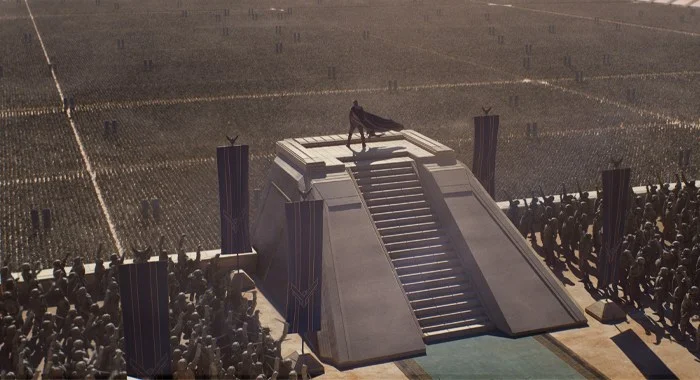
Arrakis remains the story’s main setting, but the film could also visit Wallach IX, where the Sisterhood trains Reverend Mothers and the conspirators meet early in Messiah, as well as the planet Tleilax. The teaser’s glimpses of the Fremen holy war leave room for other worlds, too. If Villeneuve does take us elsewhere, the visual contrast could be part of the point; Part Two made Geidi Prime feel strikingly unlike Arrakis.
Arrakeen itself should have changed. Herbert describes a more modern, urban capital, shaped by the many Fremen who have moved there to live closer to Muad’Dib and the center of power. Paul has returned to the castle his father seized in 10,191 A.G. A city that looks prosperous could make a useful screen image of the rot beneath the new regime. The teaser includes at least one glimpse of this changed Arrakeen.
The setting can carry the same argument as the plot: Paul’s rise has altered the Fremen and their world. How strongly Villeneuve makes that visible—and how directly he states Herbert’s critique of power—remains uncertain.
Old allies, new players
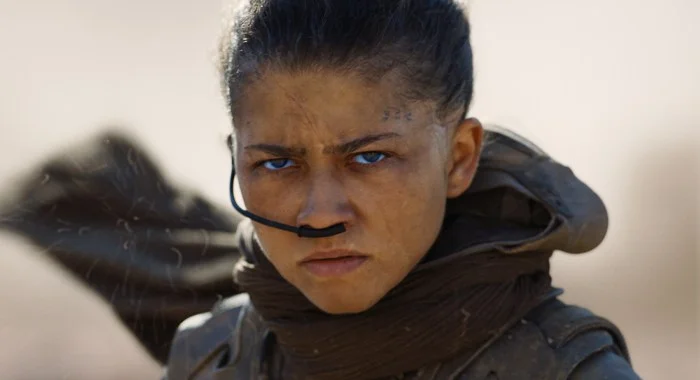
Chalamet returns as Paul, now carrying two roles at once: emperor of a spacefaring realm and the Fremen’s prophesied deliverer. Chani is back as well, though whether she’ll stand beside him is harder to call. Her departure in Part Two replaced the novel’s version, where she accepts her place beside Paul while understanding that his marriage to Princess Irulan is political.
That difference matters. In Herbert’s book, Paul tells Chani he won’t truly take Irulan as his wife and that Chani’s child will be his heir. The film never gives them that conversation; Chani leaves believing Paul has revealed his aristocratic instincts. The teaser suggests that, 12 years later, some of her anger has eased. Talk about the name of their possible child points toward an event from the novel, though the film’s route to it may be different.
Florence Pugh returns as Irulan, Paul’s wife in name and the chronicler of his reign. Part Two established her ties to the Bene Gesserit, leaving open whether she’s carrying out their plans. The Kwisatz Haderach program hasn’t gone away.
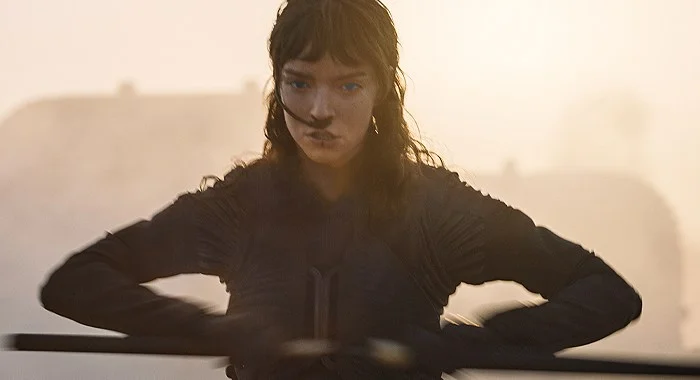
On the Sisterhood side, Rebecca Ferguson returns as Lady Jessica, whose circumstances may look very different if the film follows her Messiah storyline. Anya Taylor-Joy gets a full role as Alia Atreides after appearing only in Paul’s visions in Part Two, while still in the womb. Alia’s book storyline depends on something she did in the first novel—an event the second film cut. Her motives may therefore change substantially. The teaser also shows devotion gathering around her, but it’s unclear whether the Fremen will call her “St. Alia of the Knife”; that title’s blade is tied to another omitted plot point.
Javier Bardem returns as Stilgar, Josh Brolin as Gurney Halleck and Jason Momoa as Duncan Idaho. Duncan’s return is one of the story’s major reveals, given his apparent death in Part One. Its precise explanation is still a spoiler.
Charlotte Rampling is also back as Reverend Mother Gaius Helen Mohiam. In the novel, Mohiam remains influential and is held in Arrakeen; whether the film gives her that role is unknown. The book’s Guild Navigator Edric is another question mark. His connection to Paul may not make the cut, especially since Villeneuve planted a possible substitute in Part Two.
That may involve Lady Margot Fenring, played by Léa Seydoux in Part Two. She was tasked by the Bene Gesserit with preserving the Harkonnen line. Herbert dropped the Fenring thread in favor of Edric, and Seydoux isn’t listed in the Part Three cast, so any continuation remains speculation.
One new arrival is confirmed: Robert Pattinson plays Scytale, a Face Dancer central to Messiah and potentially to later chapters. Ida Brooke and Nakoa Wolf-Momoa play Ghanima and Leto II, names with major implications for the saga’s future. The teaser also confirms Isaach de Bankolé as Farok, a Fremen worn down by Paul’s war and the speed at which his society is changing.
The filmmakers behind the return
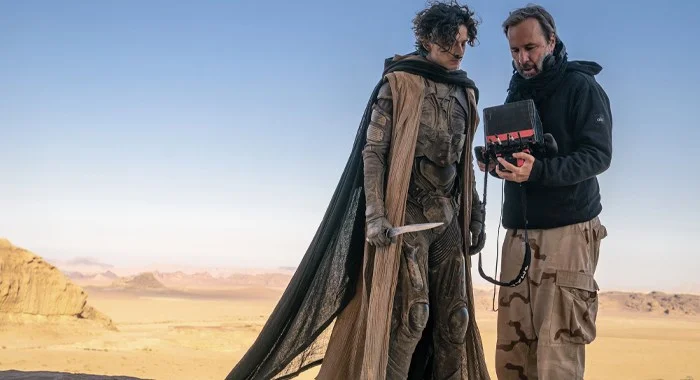
Villeneuve directs again and says this will be his last Dune film, bringing Paul’s story to a close. That’s a meaningful vote of confidence in a chapter built to complicate the usual adventure-film payoff. He co-wrote the screenplay with Brian K. Vaughan, co-creator of Y: The Last Man and a veteran of Lost. Villeneuve is also an executive producer alongside Richard P. Rubinstein, John Harrison and Jessica Derhammer.
His fellow producers are Thomas Tull, Mary Parent, Byron Merritt, Tanya Lapointe, Joseph M. Caracciolo Jr., Cale Boyter, Brian Herbert and Kim Herbert. Linus Sandgren, whose credits include Saltburn and the recent Wuthering Heights, is the cinematographer. Patrice Vermette returns as production designer after working with Villeneuve on Dune and Prisoners. Editor Joe Walker and costume designer Jaqueline West also return from the first two films.
Hans Zimmer is back on the score. Expect more of the deep bass and wavering vocal refrains that have helped define the films’ sound.
A crowded release date, and an uncertain next step
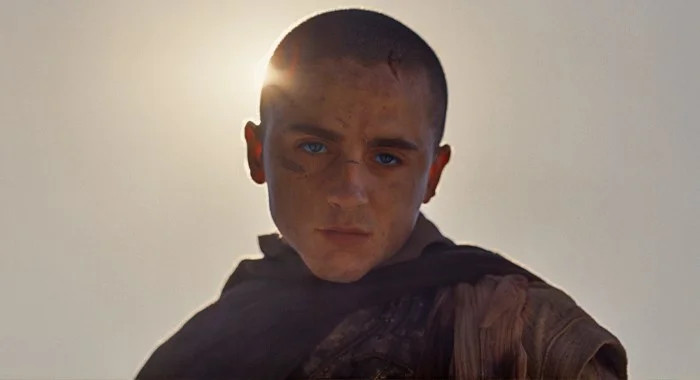
Dune: Part Three is scheduled for December 18, 2026, the same date that Avengers: Doomsday is expected to arrive. Chalamet and Robert Downey Jr. have floated “Dunesday,” imagining a Barbenheimer-style box-office moment. Whether the studios will embrace that pairing is still up in the air.
The franchise’s longer life is a separate question. Warner Bros. and Legendary have three films and the ongoing series Dune: Prophecy to build on, and Children of Dune is the clearest next adaptation. It follows Paul’s heirs and could provide a natural stopping point, even though Herbert wrote three more books after it.
Beyond Children, the story jumps more than 3,000 years ahead, introduces new characters and grows more abstract as Herbert’s ideas expand. Villeneuve is moving on to a James Bond film. The material may continue without him, but it’s unclear who could shape those later books into films that connect with a broad audience.
There’s still good reason to hope. The series has room to keep asking hard questions about leadership and consciousness, and Villeneuve has made those questions legible to a large audience. The next filmmaker will have to earn the same trust.
Dune: Part Three opens in theaters on December 18, 2026.