This excerpt was originally published in Pre Shift, our newsletter for the hospitality industry. Subscribe for more first-person accounts, advice, and interviews.
Now Open is a yearlong series celebrating some of 2026’s most exciting new restaurants. Throughout the year, we’ll check in with teams in Chicago, New York City, and Washington, D.C., to hear what it’s really like behind the scenes of a buzzy opening. Then, we’ll host exclusive meals at these restaurants as part of Dinner Party, presented by Capital One. Read along for challenges, candid reflections, and advice from the proprietors behind some of the country’s hottest new openings.
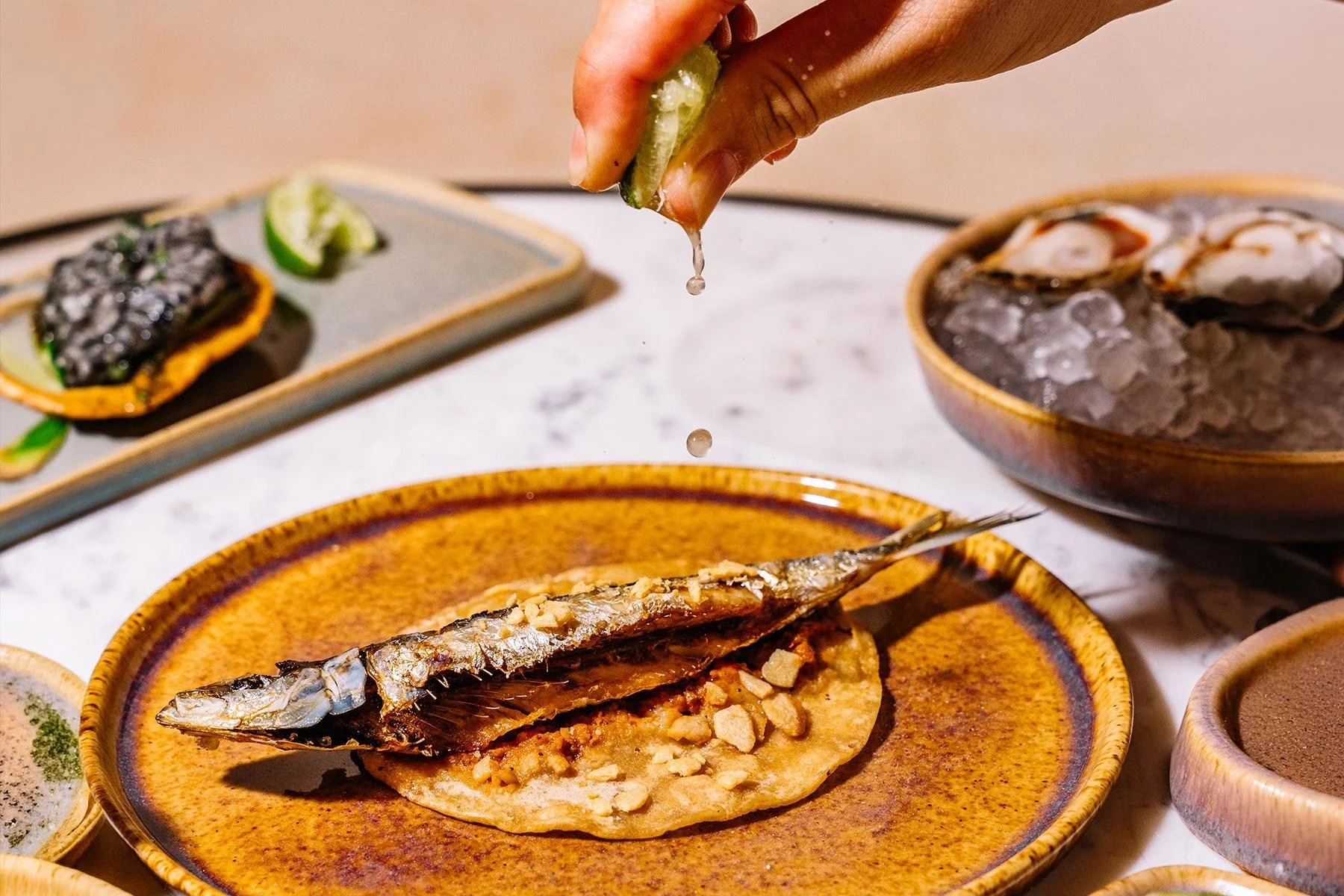
El Camarón Peludo gives Giovanni Cervantes and Tania Apolinar a different measure of restaurant service: time. After years of feeding queues at Taqueria Ramírez and Carnitas Ramírez, and handling boisterous World Cup crowds at Socceria, the pair have opened a small, walk-in-only seafood and wine restaurant in Manhattan’s West Village. Here, the aim is for guests to settle in over mariscos rather than eat quickly and make room for the next person.
That shift in pace is part of the concept, not a side effect. The menu draws on Mexican seafood cooking and Spanish influences, while wines come from around the world. The room, the plate sizes and the music also reflect the European wine bars Cervantes and Apolinar encountered on trips abroad. The food, they say, still begins with seafood and freshness.
The project brings the restaurateurs together with Carlos Barrera, a Mexico City-born chef whose background includes Michelin-starred restaurants in Spain and a long run of popular New York pop-ups. Their working relationship grew from a mix of neighborhood proximity, social media and a shared pop-up. The restaurant itself came into focus through practical constraints, travel and a conversation about the dishes the team missed.

A narrow room led to a new format
A taqueria was among the first ideas Cervantes and Apolinar considered for the site. Its long, narrow layout made that plan a poor fit. Rather than force an existing format into the room, they looked toward a seafood-focused restaurant with wine.
Cervantes had already been discussing a New York mariscos concept with Barrera when they found the space. Those conversations covered the foods they enjoyed and the Mexican dishes they missed. They also turned to their European travels and the appeal of tapas bars, where small plates and wine invite a slower visit. The central design question became how to bring that style of eating together with a Mexican approach.
A trip to Europe gave Cervantes a temporary preference for pushing the Spanish side further. He recalls coming home and proposing a menu that was “even more Spanish.” Apolinar and Barrera challenged the idea. Looking back, he’s glad they did: the balance they found leaves room for both sets of references without making the menu feel like a contest between them.
Apolinar frames the menu around the ingredient. A simple gambas a la plancha and a carpaccio give the seafood space to stand on its own. Other dishes, including tuna tostadas and aguachile, bring more of the sauces and flavors associated with Mexican cooking. The contrast is deliberate: the team can borrow a Spanish preparation or wine-bar format while keeping the character of individual dishes distinct.
The European influence extends beyond recipes. Cervantes points to the intimate room, the scale of the plates and the overall feel they want guests to experience. Their goal is a place that feels cozy and friendly, where the format encourages people to share and stay awhile. In that sense, the restaurant’s identity comes as much from how the meal unfolds as from any single dish.
A social-media regular became a collaborator
Barrera’s connection to the owners started before the restaurant was on the table. He was among the early customers at Taqueria Ramírez and kept in touch through Instagram, where he regularly left comments and flame emojis. The exchange eventually became personal: Cervantes and Apolinar discovered they were neighbors, with Barrera living in Greenpoint, and began seeing him more often.
A pop-up turned that familiarity into a working relationship. Barrera served his Trompo Negro, a version of al pastor made with a smoky black spice paste used widely in Yucatán and nearby regions. Apolinar describes that event as the first time they collaborated in a professional kitchen setting. The meal gave them a practical sense of how they worked together, alongside the conversations about seafood and the menu.
The route from Instagram comments to a restaurant partnership isn’t presented as a formula. In this case, it followed an existing customer relationship, a shared neighborhood and a successful pop-up. By the time Cervantes, Apolinar and Barrera began shaping El Camarón Peludo, they already had a working connection and overlapping interests in the food they wanted to serve.

Service changes with the pace of the meal
At Taqueria Ramírez and Carnitas Ramírez, Cervantes says the work revolves around speed, accuracy and volume. The teams need to make each order correctly and keep the line moving. Consistency is the measure: when a high-volume operation keeps delivering the food as intended, the system is working.
El Camarón Peludo asks staff to spend longer with each table. Guests may be there for an hour or two, with music, wine and the atmosphere forming part of the experience. Cervantes describes the service as more personal because employees have time to see how people are responding and to guide them through the restaurant’s particular mood. The slower pace feels comforting to him, even as it requires a different kind of attention from the rapid rhythm of a taqueria.
That distinction highlights a challenge for operators with several concepts: a management approach that works in one room may not translate to another. The restaurants vary in food, volume and how long customers stay. Their staff and partners need enough responsibility to keep each operation steady while Cervantes and Apolinar divide their attention among the businesses.
Four restaurants require a team behind the owners
Cervantes credits the team at Taqueria Ramírez, where many employees have worked since its opening, with allowing the owners to step away without losing confidence in daily operations. At Carnitas Ramírez, partners Yvon de Tassigny and Kari Boden took on day-to-day management as part of the original plan. Those roles give Cervantes and Apolinar more room to focus on their newer projects, El Camarón Peludo and Socceria.
Apolinar describes the schedule as tiring and nonstop, while also finding the customer response rewarding. Seeing people enjoy the restaurants, she says, makes the workload feel worthwhile. Her account puts the personal side of expansion alongside its operational demands: adding a new concept means building a place where customers connect with the food and the people serving it, while finding capable staff and partners to support the owners across multiple sites.
El Camarón Peludo’s appeal rests on that combination of restraint and range. The restaurant applies the leisurely rhythm of a wine bar to Mexican seafood, with Spanish and European references shaping some preparations and the setting. For Cervantes and Apolinar, the next test is making that slower, more personal experience consistent while they continue to balance the demands of four very different New York restaurants.